

It is a very interesting topic. Due to historical reasons, marble is more well-known among the Chinese people. For most people who have not worked in the stone industry, people will call marble, granite, travertine and other natural stones collectively marble, and they are not clear about the difference between them. Today we will discuss the difference between the two from the aspects of composition, structure, appearance, performance and use:
1. Composition
• Granite: It is mainly composed of quartz, feldspar and a small amount of mica and other minerals. The quartz content is usually high, generally between 20% - 60%, and the feldspar content is also relatively rich. These mineral components make granite have higher hardness and durability.
• Marble: It is mainly composed of calcium carbonate (CaCO₃) and magnesium carbonate (MgCO₃), and belongs to carbonate rock. Its main mineral components are calcite and dolomite. The hardness of these minerals is relatively low, so the hardness of marble is also lower than that of granite.
2. Structure
• Granite: It has a clear crystalline structure, the mineral particles are clearly visible, the particle size is uniform, and the structure is dense. This structure makes granite have higher compressive strength and wear resistance, and it is not easy to be scratched.
• Marble: The structure is relatively loose, and there are many tiny pores between mineral particles. These pores make marble absorbent and easy to be polluted, and also reduce its wear resistance and compressive strength.
III. Appearance
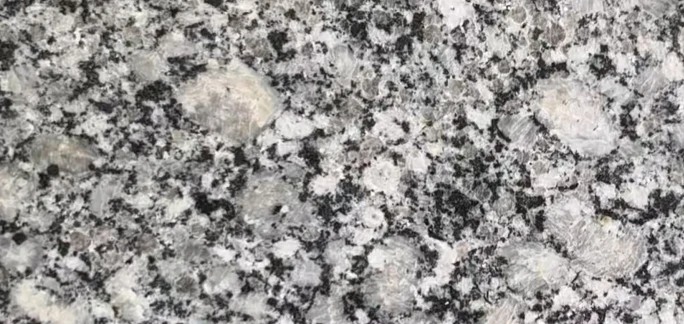
• Granite:
o Color: The colors are rich and varied, and the common ones are black, gray, white, red, green, etc. It can also present a variety of patterns and textures, such as spots, stripes, rhymes, etc. For example, black granite (such as "Indian Black") has pure color and simple texture; while granite (such as "Shandong White Hemp") presents a pattern with black spots on a white background.
o Gloss: The surface is smooth after polishing, with high gloss, which can reflect clear reflections, giving people a hard and cold feeling.
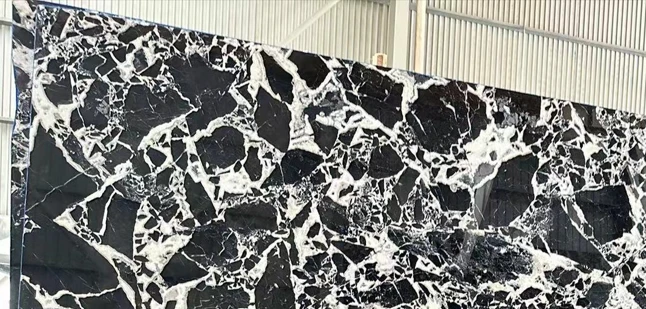
• Marble:
o Color: The color is relatively soft, mainly light tones such as white, gray, beige, and there are also a small amount of dark marble. Its texture usually appears cloudy, wavy or striped, with a unique artistic beauty. For example, white marble (such as "white marble") has a fine texture and a cloud-like texture, and is often used for carving and decoration.
o Gloss: The glossiness is slightly lower than that of granite, and the surface presents a warm texture, giving people a soft and noble feeling.
IV. Performance
• Granite:
o Hardness: The hardness is relatively high, the Mohs hardness is generally between 6 and 7, the wear resistance is good, it is not easy to be scratched, and it is suitable for places with high wear.
o Acid and alkali resistance: It has good acid resistance and is not easily corroded by acidic substances, but it may be affected to a certain extent if exposed to a strong alkaline environment for a long time.
o Water absorption rate: The water absorption rate is low, generally less than 0.5%, the impermeability is good, and it is not easy to be penetrated by water, so it has strong pollution resistance.
o Durability: It is extremely durable, can withstand large temperature changes and harsh natural environments, and has a long service life.
• Marble:
o Hardness: The hardness is relatively low, the Mohs hardness is generally between 3 and 4, it is easy to be scratched, and the wear resistance is relatively poor.
o Acid and alkali resistance: poor acid resistance, easily corroded by acidic substances, dissolution and fading on the surface, so it is not suitable for places such as kitchen countertops that are easily exposed to acidic substances.
o Water absorption rate: high water absorption rate, generally between 0.5% - 1%, easy to absorb moisture and stains, poor pollution resistance, and requires regular maintenance and cleaning.
o Durability: poorer durability than granite, long-term exposure to humid or harsh environment is prone to weathering, discoloration and other problems.
V. Uses
• Granite:
o Architectural decoration: commonly used for decoration of indoor and outdoor floors, walls, columns and other parts, such as square floors, stair steps, exterior wall dry hanging, etc., can withstand heavy weight and wear.
o Engineering structure: due to its high strength and good durability, it is also often used in engineering structural materials such as bridges, dams, monuments, etc.
o Carving materials: some granites with fine texture and uniform color are also suitable for carving, and can produce exquisite sculptures.
• Marble:
o Interior decoration: Mainly used for the decoration of indoor walls, floors, window sills, cabinet countertops and other parts, which can create a luxurious and elegant atmosphere. However, due to its low hardness, special care should be taken when using marble on kitchen countertops to avoid scratches by hard objects such as knives.
o Crafts: Marble with fine texture and beautiful patterns is often used to make various crafts, such as marble paintings, ornaments, etc., and has high artistic value.
VI. Price
• Granite: The price is relatively stable. The price of ordinary granite generally ranges from tens of yuan to more than one hundred yuan per square meter, and some relatively rare granites such as Shanxi black can reach hundreds of yuan.
• Marble: The price difference is large. The price of ordinary marble is similar to that of granite, but some precious marble varieties, such as Carrara marble from Italy and beige marble from Spain, may be very expensive, up to thousands or even tens of thousands of yuan per square meter. And because of the diverse characteristics of marble patterns, many times the price of the same marble varies greatly due to different patterns. The dominant factor in the price of white marble is more determined by the brightness of the different board surfaces. The whiter the base color, the higher the price.