

Precast Terrazzo Tiles at 20–30 mm: A Practical Material for Green Tenders
Precast terrazzo and concrete tiles combine mineral aggregates with a cementitious binder and factory-controlled compaction, producing a dense tile without relying on synthetic resin as the primary binder. For procurement teams, the main advantages are measurable: mineral content, controlled thickness, repeatable dimensions, low-emission material chemistry, and factory production suitable for bulk orders.
For green building tenders, however, environmental claims should be supported by product composition, VOC documentation where required, recycled-content data, and project-specific compliance documents rather than marketing statements.
Mineral Aggregate + Cement Binder: 0% Synthetic Resin in Cement-Based Formulations
Natural Stone Aggregate at 60–80% by Volume
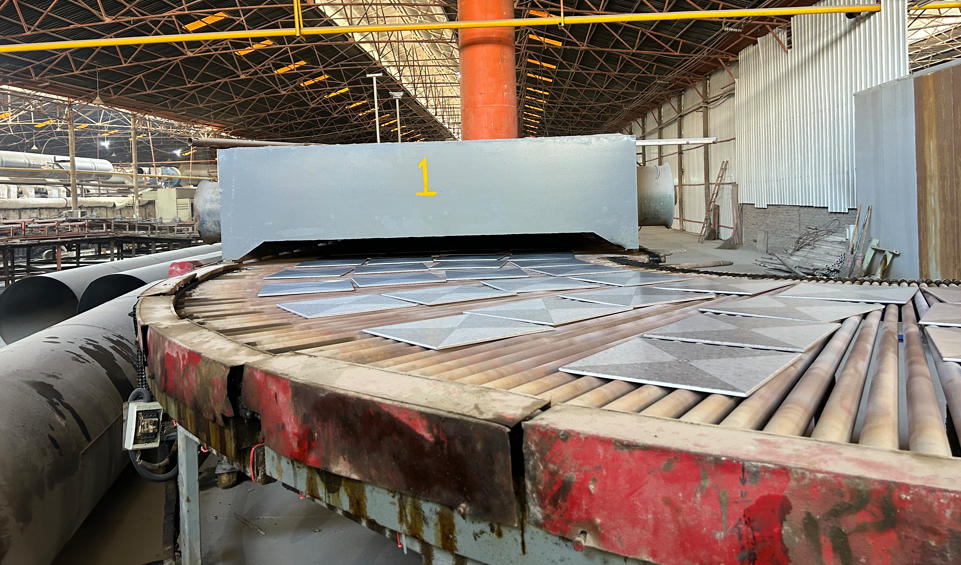
A conventional cement-based terrazzo tile can contain a high proportion of mineral aggregate, including marble chips, granite fragments, quartz, limestone, recycled stone, or other compatible aggregates. The exact ratio depends on aggregate grading, tile thickness, cement formulation, pigment dosage, and required mechanical performance.
The manufacturing principle is straightforward:
Mineral aggregate + Portland cementitious binder + water + mineral pigments → compacted precast tile
Unlike resin terrazzo, cement-based terrazzo does not require a polymer resin matrix as the principal binder. This distinction matters when the specification restricts petrochemical-based binders or requires a cementitious product.
For procurement, request the actual formulation or material declaration instead of accepting a generic statement such as "eco-friendly tile."
20–30 mm Thickness: Dimensional Control Before Surface Finishing
Tile thickness affects weight, installation requirements, pallet loading, cutting yield, and freight cost.
| Nominal Thickness | Typical Application | Approx. Weight at 2,400 kg/m³ | Procurement Consideration |
|---|---|---|---|
| 20 mm | Interior flooring, residential and commercial areas | 48 kg/m² | Lower shipping weight |
| 25 mm | Commercial flooring, retail and hospitality | 60 kg/m² | Balanced structural mass |
| 30 mm | Heavy-use flooring and selected exterior applications | 72 kg/m² | Higher mass and freight load |
Actual density must be confirmed through factory testing because aggregate type and mix design can change the finished weight.
A practical purchase specification should define thickness tolerance, dimensional tolerance, surface flatness, edge condition, and acceptable visual variation before production begins.
ASTM C979 and ASTM C170: Pigment and Stone Performance
Where mineral pigments are used, the pigment system should be compatible with cementitious materials and resistant to alkaline conditions. ASTM C979 provides a reference for pigments used in integrally colored concrete.
For aggregate evaluation, ASTM C170 can be used as a reference for compressive strength testing of dimension stone, but it should not automatically be treated as the governing tile-performance standard. The test standard must match the actual product and project specification.
This distinction prevents a common procurement error: requesting a familiar stone standard for a manufactured cementitious tile without checking whether the standard applies to the finished product.
ASTM C140 and EN 13748: Mechanical Testing Before Green Tender Approval
Compressive Strength Above 40 MPa: Verify the Finished Tile
The environmental profile of a tile has little value if the product cannot satisfy the mechanical requirements of its intended application.
For cement-based terrazzo and concrete products, procurement should distinguish between:
Raw cement strength
Aggregate strength
Green-body strength after pressing
Finished tile compressive strength
Flexural strength after curing
Wear resistance after surface finishing
Where applicable, ASTM C140 provides test procedures for sampling and testing concrete masonry units and related concrete products. For terrazzo tiles, the governing project specification may instead reference EN 13748 or another regional product standard.
The supplier should provide test reports for the finished product, not only certificates for individual raw materials.
Flexural Strength and Water Absorption: Two Numbers Buyers Should Request
For flooring applications, flexural strength provides useful information about the tile's resistance to bending during handling and service.
Water absorption is equally important because cement-based products are inherently porous unless their mix design, compaction, curing, and surface treatment reduce open porosity.
A technical submittal should therefore identify:
| Property | Procurement Data to Request | Why It Matters |
|---|---|---|
| Flexural strength | Tested value in MPa | Handling and floor-load resistance |
| Compressive strength | Tested value in MPa | Overall mechanical capacity |
| Water absorption | Tested percentage | Moisture behavior |
| Density | kg/m³ | Weight and shipping calculation |
| Thickness tolerance | mm | Installation and lippage control |
| Dimensional tolerance | mm | Joint alignment |
| Abrasion resistance | Project-specific test | High-traffic flooring |
| Slip resistance | Project-specific test | Wet-area safety |
No single number should be applied to every terrazzo formulation. The target values should be established against the intended use, local building regulations, installation system, and tender specification.
EN 13748: Match the Product Standard to the Tile Category
EN 13748 is widely used in Europe for terrazzo tiles and divides requirements according to product characteristics and intended application.
For an international procurement program, the factory should identify the applicable part of the standard and provide test data against the required classification.
A useful technical submittal package should contain:
Product technical datasheet
Material composition statement
Dimensional tolerance data
Water absorption test
Flexural strength test
Abrasion or wear test where specified
Slip-resistance data where applicable
Surface-finish description
Packing specification
Country-of-origin documentation
Need tested terrazzo specifications before submitting your green building tender?
Low-VOC Construction Materials: 0 g/L Added VOC from Cementitious Binder
Cement-Based Composition Is Not the Same as a VOC Certificate
Cement, mineral aggregate, water, and inorganic pigments do not function like solvent-based coatings or synthetic adhesive systems. Once cured, a conventional cementitious terrazzo tile generally has very low potential for VOC emissions from the core material.
However, "cement-based" does not automatically mean "zero VOC" for the complete installed floor system.
Potential emission sources can include:
Surface sealers
Penetrating treatments
Cleaning chemicals
Adhesives
Primers
Joint sealants
Protective coatings
For green tender documentation, the tile and the installation system should therefore be evaluated separately.
LEED v4.1: Product Documentation Supports Material Credit Assessment
LEED does not simply award a point because a product is labeled "green." Project teams evaluate specific credit requirements, which can include material ingredients, environmental product declarations, responsible sourcing, recycled content, regional considerations, and low-emitting characteristics depending on the rating system and project scope.
For this reason, a factory should provide factual documentation such as:
| Environmental Data | Preferred Documentation |
|---|---|
| Cementitious composition | Product material declaration |
| Natural aggregate | Aggregate source declaration |
| Recycled aggregate | Recycled-content statement |
| VOC characteristics | Applicable emissions documentation |
| Manufacturing location | Factory address and origin declaration |
| Environmental impact | EPD where available |
| Quality management | ISO 9001 certification where applicable |
| Chemical ingredients | Product ingredient disclosure where required |
The correct approach is to supply evidence that the project consultant can map against the applicable LEED credit rather than claiming that the tile itself is "LEED certified."
Factory Processing at ±1 mm: From Blocks Yard to Finished Tile
Aggregate Selection and Blocks Yard Control
Natural stone aggregate determines much of the visual variation in terrazzo. When marble or granite chips are produced from larger stone blocks, the raw material should be sorted by color family, mineral composition, particle size, and contamination level.
For a factory supplying repeated container orders, raw-material consistency is a procurement issue rather than only an aesthetic issue.
The production workflow can include:
Blocks yard → stone cutting → aggregate crushing → screening → grading → batching → cement mixing → pressing → curing → grinding → honing/polishing → calibration → inspection → packing
Aggregate grading should remain consistent between production batches. Significant changes in chip size can alter the surface appearance after grinding, even when the cement color remains unchanged.
Infrared Cutter and CNC Water-Jet Cutting for Project Components
Standard tiles can be processed with factory cutting equipment according to the specified dimensions.
For stair treads, borders, transition pieces, drainage details, access panels, or geometric floor patterns, an Infrared cutter can provide controlled straight-line cutting, while CNC water-jet cutting can produce complex profiles and patterns.
The final drawing should identify:
Overall dimensions
Thickness
Edge profile
Corner radius
Cut-out dimensions
Tolerance
Surface finish
Quantity by size
Packing sequence
For large commercial flooring projects, these details should be frozen before mass production.
Honed, Polished, Flamed and Bush-Hammered Surfaces

Surface finishing changes both appearance and technical performance.
| Finish | Processing Method | Typical Use | Procurement Issue |
|---|---|---|---|
| Honed | Progressive abrasive grinding | Interior flooring | Controlled sheen and smoothness |
| Polished | Fine abrasive polishing | Decorative interior areas | Higher surface reflectivity |
| Flamed | Thermal treatment | Selected exterior stone components | Surface texture and color change |
| Bush-hammered | Mechanical impact tooling | Textured architectural surfaces | Roughness and cleaning behavior |
Flamed/Bush-hammered/Honed finish should never be treated as interchangeable specifications. The finish must be approved using a physical sample because aggregate type, cement color, pigment concentration, and grinding depth can significantly change the final appearance.
Dry-Lay Inspection at 20–30 mm: Color Control Before Container Loading
Dry-Lay Inspection Reduces Batch-to-Batch Variation
Terrazzo is a composite material. Natural aggregates can vary in tone, veining, particle shape, and mineral distribution.
For large flooring projects, the factory should perform a Dry-lay inspection before final packing.
A recommended inspection sequence is:
Select representative tiles from the production batch.
Arrange them according to the installation sequence.
Check aggregate distribution.
Compare cement background color.
Identify abnormal chips, cracks, pinholes, or surface defects.
Verify dimensions and thickness.
Photograph the approved batch.
Retain the approved sample as the visual reference.
This process is particularly useful when multiple containers are manufactured over several production cycles.
Color Reference: Physical Samples Are More Reliable Than Screen Images
Digital photographs can shift color because of lighting, camera settings, compression, and display calibration.
For commercial procurement, the preferred reference hierarchy is:
Approved physical sample → approved production mock-up → factory dry-lay photographs → digital images
For patterned terrazzo, the approved sample should also define aggregate size distribution and background cement color.
Book-Matching: Applicable to Patterned Components, Not Every Tile Series
Book-matching is more relevant to large-format patterned slabs and selected cut-to-size terrazzo components than to ordinary modular floor tiles.
If a project requires directional pattern continuity, the factory should receive a numbered layout drawing showing the relationship between individual pieces.
For standard 300 × 300 mm, 400 × 400 mm, or 600 × 600 mm tile installations, batch color control and dry-lay inspection are usually more relevant than book-matching.
Need batch color control across multiple containers for one flooring project?
Bulk Buying at 20–28 Tons per Container: Packaging and Freight Control
Seaworthy Wooden Crates for Long-Distance Transport

Cement-based terrazzo tiles have high density, so shipping weight must be calculated before confirming the container quantity.
Using an indicative density of 2,400 kg/m³:
20 mm tile:
1 m² × 0.020 m × 2,400 kg/m³ = approximately 48 kg/m²
25 mm tile:
1 m² × 0.025 m × 2,400 kg/m³ = approximately 60 kg/m²
30 mm tile:
1 m² × 0.030 m × 2,400 kg/m³ = approximately 72 kg/m²
Actual figures must use the tested density of the selected formulation.
Packaging should account for:
Tile weight
Crate weight
Pallet weight
Moisture protection
Internal bracing
Forklift access
Container loading sequence
Maximum permitted gross weight
Destination-country import requirements
Seaworthy wooden crates should be designed to prevent tile movement and edge impact during repeated handling.
Where solid wood packaging is used for international shipment, the packaging should meet applicable ISPM 15 requirements.
20–30 mm Tiles: Freight Efficiency Versus Breakage Risk
Increasing tile thickness increases both product weight and freight consumption per square meter.
A factory should therefore calculate:
Net tile weight + packaging weight + total quantity = estimated gross shipment weight
Do not calculate container capacity using square meters alone.
For example, two products with the same 1,000 m² quantity can have materially different shipping weights if one is 20 mm and the other is 30 mm.
Factory Procurement at 500–5,000 m²: How Distributors Should Structure Bulk Orders
MOQ and Mixed-Container Planning by 300–600 mm Modules
For overseas distributors, the practical purchasing unit is usually the container rather than an individual tile.
A purchase order should separate:
Standard-size tiles
Special-size tiles
Borders
Stair components
Replacement stock
Samples
Packaging materials
Mixed loading can improve container utilization, but excessive SKU variation increases production changeovers and inspection workload.
For repeat distribution, a smaller number of high-volume SKUs is usually easier to control than dozens of low-volume dimensions.
5–10% Reserve Stock for Commercial Flooring Maintenance
For commercial flooring, the purchaser should consider maintaining replacement tiles from the same production batch.
The appropriate reserve percentage depends on:
Project area
Tile size
Installation complexity
Cutting waste
Expected future repair requirements
Product availability after project completion
For a large development, maintaining a small quantity of original production stock can reduce the risk of future color mismatch.
ISO 9001: Process Control Is More Useful Than a Generic "Factory Certificate"
For repeated procurement, buyers should assess the factory's production controls rather than relying solely on a company profile.
A useful factory audit should examine:
| Audit Area | What to Check |
|---|---|
| Raw material | Aggregate source and batch segregation |
| Mixing | Weighing and batching records |
| Pressing | Compaction process |
| Curing | Time and environmental controls |
| Calibration | Thickness tolerance |
| Finishing | Grinding and honing consistency |
| Inspection | Sampling frequency and rejection records |
| Packing | Crate strength and internal protection |
| Traceability | Batch numbers and production dates |
| Quality system | ISO 9001 documentation where applicable |
For an overseas distributor, these controls determine whether a 2,000 m² order can be repeated six months later with acceptable dimensional and visual consistency.
Cement Terrazzo vs Sintered Stone: 20–30 mm Procurement Comparison
Material Selection by Absorption, Fabrication and Project Scale
Precast terrazzo should not be compared with sintered stone only by appearance. They have different manufacturing processes and different performance characteristics.
| Factor | Precast Cement Terrazzo | Sintered Stone |
|---|---|---|
| Primary binder | Cementitious | Mineral-based sintered body |
| Typical composition | Cement + mineral aggregate + pigments | Selected minerals and inorganic additives |
| Production | Pressing + curing + grinding | High-temperature sintering |
| Typical thickness | 20–30 mm common in heavy tile formats | Multiple thickness options |
| Surface processing | Grinding, honing, polishing | Factory surface treatment |
| Aggregate visibility | High | Product dependent |
| Pattern control | Aggregate batch dependent | Factory-designed surface pattern |
| Water absorption | Mix-design dependent | Generally very low |
| On-site cutting | Diamond tools | Specialized cutting equipment |
| Custom terrazzo aggregate | Practical | Not equivalent |
| Green tender documentation | Composition and environmental data required | Product-specific declarations required |
| Bulk shipment | High density; weight must be calculated | Weight varies by thickness and density |
The correct material depends on the specification, application, installation method, required finish, environmental documentation, and project budget.
Green Tender Documentation at 0% Added Resin: What Procurement Teams Should Request
Material Declaration + Test Report + Origin Document
A credible product submission should allow the consultant, contractor, and procurement department to verify the product independently.
For precast terrazzo tiles, request:
Technical documentation
Product dimensions
Thickness tolerance
Density
Flexural strength
Compressive strength where specified
Water absorption
Abrasion resistance
Slip resistance where applicable
Environmental documentation
Material composition
Recycled-content information where applicable
VOC/emissions documentation where applicable
EPD where available
Manufacturing location
Raw-material declarations
Commercial documentation
MOQ
Monthly production capacity
Lead time
Packing method
Container loading plan
Incoterms
Country of origin
HS classification confirmation by the importer/broker
This document package gives a purchasing team enough information to compare factories on measurable criteria rather than brochure language.
Factory-to-Distributor Supply Chain at 20–28 Tons: A Repeatable Purchase Workflow
Seven Procurement Gates for International Orders
A controlled order can follow this sequence:
Gate 1 - Sample approval
Confirm aggregate, cement color, dimensions, thickness, and finish.
Gate 2 - Technical approval
Confirm required test standards and project performance values.
Gate 3 - Production approval
Confirm raw-material batch, production schedule, and acceptable visual range.
Gate 4 - Dry-lay inspection
Inspect representative tiles before packing.
Gate 5 - Final QC
Check dimensions, thickness tolerance, surface defects, quantity, and packing.
Gate 6 - Container loading
Verify crate arrangement, weight distribution, and loading photographs.
Gate 7 - Shipping documents
Prepare commercial invoice, packing list, bill of lading, certificate of origin where required, and other destination-specific documents.
This structure is suitable for distributors purchasing recurring quantities from a China-based manufacturer because each stage creates a documented approval point.
Why Cement-Based Terrazzo Fits Mineral-Content Specifications at 60–80% Aggregate
Precast terrazzo is well suited to projects where the design calls for visible natural mineral aggregate combined with a cementitious matrix.
The material can incorporate:
Marble chips
Granite chips
Limestone
Quartz aggregate
Recycled stone
Recycled concrete aggregate where technically suitable
Mineral pigments
The environmental value should be evaluated through measurable indicators such as aggregate source, recycled content, binder composition, manufacturing energy, product service life, transportation distance, and end-of-life potential.
A green tender should therefore treat environmental performance as a documented product attribute rather than a visual characteristic.
Procurement Checklist: 20–30 mm Terrazzo Tiles for International Projects
Before issuing a purchase order, confirm:
Tile dimensions
20, 25, or 30 mm nominal thickness
Thickness tolerance
Dimensional tolerance
Aggregate type
Aggregate size distribution
Cement color
Pigment specification
Honed, polished, flamed, or bush-hammered finish
Flexural strength
Water absorption
Abrasion resistance
Slip resistance where required
Approved physical sample
Dry-lay inspection procedure
Replacement-stock quantity
Seaworthy wooden crates
Container loading plan
Maximum gross shipment weight
Required environmental documentation
Applicable ASTM or EN standard
Factory quality records
Country-of-origin documentation
For distributors and project contractors, these parameters convert a decorative flooring product into a controlled procurement specification.
FAQ: 20–30 mm Precast Terrazzo Tile Procurement
What is the typical container weight for bulk precast terrazzo tiles?
A 20 mm cement-based terrazzo tile at approximately 2,400 kg/m³ weighs about 48 kg/m². Actual container weight depends on tile thickness, density, crates, pallets, and total loading quantity.
Can precast terrazzo tiles be shipped in mixed sizes in one container?
Yes. Mixed-size loading is possible, but the factory should approve the SKU list and loading plan before production. Excessive SKU variation can increase production changeovers and packing complexity.
What documents should a green building project request from a terrazzo tile supplier?
Request a technical datasheet, material composition, applicable ASTM or EN test reports, VOC documentation where required, recycled-content data where applicable, EPD if available, origin documents, and factory quality records.