

7-step quick checklist for marble study countertops
(Just compare, the wrong selection rate is reduced to less than 5%)
1 Determine the style:
• Minimalist/Nordic → Carrara White, Fish Belly White (grayish white pattern, clean and refreshing)
• Chinese/Zen → Black and White Roots, Ink Fun (ink mountain pattern, calm and white)
• Light Luxury/Retro → Venice Brown, Versace Black (golden brown flow pattern, noble under the light)
2 Look at the stone quality:
"One knock, two drops, three touches"
The knocking sound is crisp and no mute → no internal cracks
Drop ink on the back for 5 minutes without diffusing → high density, not easy to penetrate
No plastic feeling or scratches when touched → The surface glue is not too thick, easy to polish later
3 Choose thickness:
The study is mainly for reading and writing, not load-bearing, 20 mm (2 cm) is the most balanced:
1.2 cm is light but easy to crack, need to add a pad; 2 cm+ Stable but expensive, difficult to move
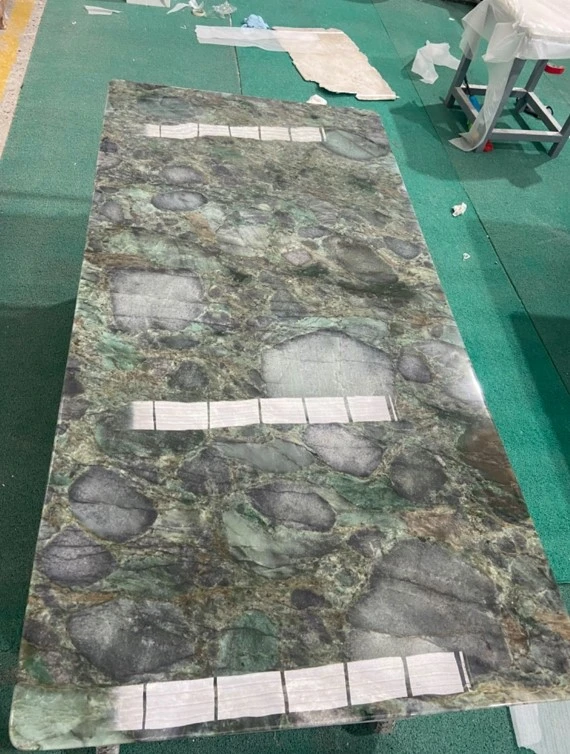
4 Select the surface:
Polishing: smooth and visible, easy to leave fingerprints, need to be equipped with an anti-glare desk lamp
Matte (fine grinding 400#): soft and not dazzling, writing without shaking paper, the first choice for study
Leather surface: warm touch, non-slip laptop, but the price is 15% higher
5 Environmental protection and radiation:
Natural marble has lower radioactivity than granite, GB50325-2020 has cancelled mandatory testing, and can be used indoors with confidence.
6 Size & splicing:
Standard table width 550-650 mm, length 1200-1800 mm; whole board > 1.4 m, it is recommended to make "thickened edge" to prevent sagging
If it needs to be extended, choose the same ore vein rough material, factory water jet matching grain, on-site dry hanging glue seamless splicing
3 things to avoid
Don't choose "resin surface" dyed board: orange peel grain will appear after half a year
Don't choose dry cracks: look at the table top at 45° against the light, and give up if there is a white line
Leave expansion joints: 3 mm elastic glue against the wall to prevent thermal expansion and contraction and top cracking
In a word: First check whether the color and texture of the study table match, then use "knock, drop and touch" to screen out inferior boards, 20 mm matte surface is the most practical, whole board is preferred, the joints must match the grain, and finally don't forget to sign a 5-year warranty.